What is misugaru?
Misugaru (미숫가루) is a Korean powder made from grains and beans that have been roasted or steamed and then ground fine. Stirred into water or milk, it becomes a nutty drink called misu, served hot or cold and best known in Korea as a summer drink.
- Korean: 미숫가루
- Also spelled misutgaru
- Hot or iced
- No cooking

What is misugaru made of?
There is no single recipe. Households and makers each use their own mix, usually several grains and beans together.
Writing for the Institute of Culinary Education, Joy Cho notes that the blend can include rice, barley, millet, adlay, soybeans, black beans, sesame seeds and corn. She adds that some brands advertise 17 to 20 grains, and Wikipedia's entry describes the powder as a combination of 7 to 10.
| Group | Can include |
|---|---|
| Rice | White, brown, black or sweet (glutinous) rice |
| Other grains | Barley, millet, adlay (Job's tears), corn, oats |
| Beans | Soybeans, black beans |
| Seeds | Sesame seeds |

How is misugaru made?
Every grain is cooked before it is milled, so the powder only needs stirring, not cooking. The Encyclopedia of Korean Culture describes the traditional method for glutinous rice misugaru in five steps.
Soak
The rice is soaked in water.
Steam
It is steamed until cooked through.
Dry
The steamed grain is spread out to dry.
Roast
It is roasted golden, a little at a time, in an iron pot.
Pound and sift
The roasted grain is pounded to powder and sifted fine.
The encyclopedia also describes barley misugaru, which is more yellow, with a nuttier aroma.

What does it taste like, and how do you drink it?
Nutty, toasted and a little malty, like cereal. Plain misugaru has no sugar added, and it is traditionally mixed with a little honey or sugar.
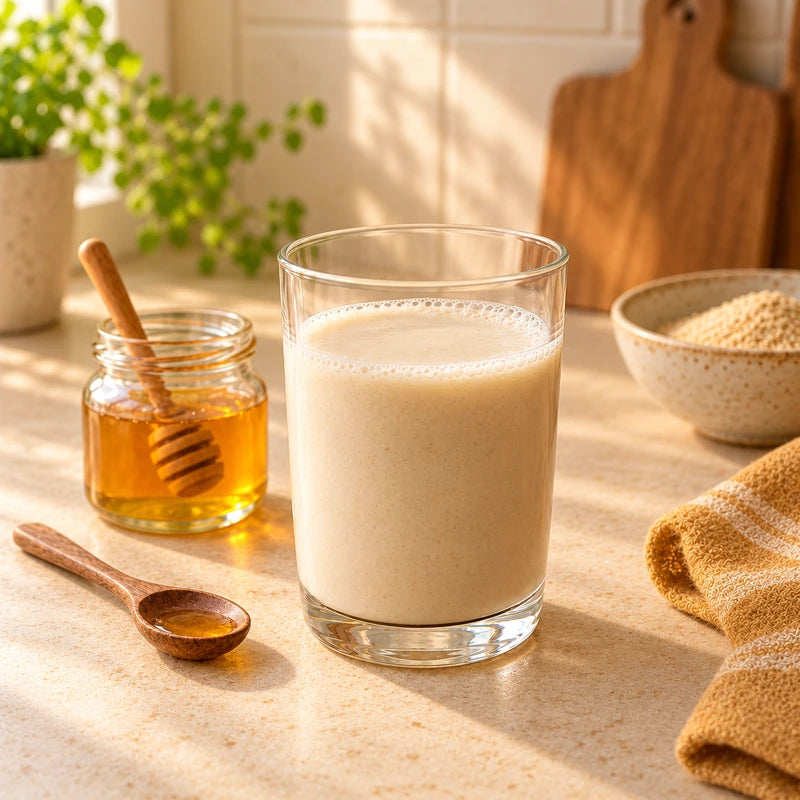
- Put a spoonful or two of powder in a glass. With Misu, that is one 20 g scoop.
- Add 2 to 3 tablespoons of warm water and stir or froth it into a smooth paste. Starting with a paste stops the powder from clumping.
- Top up with cold or warm water or milk, and sweeten it if you like.
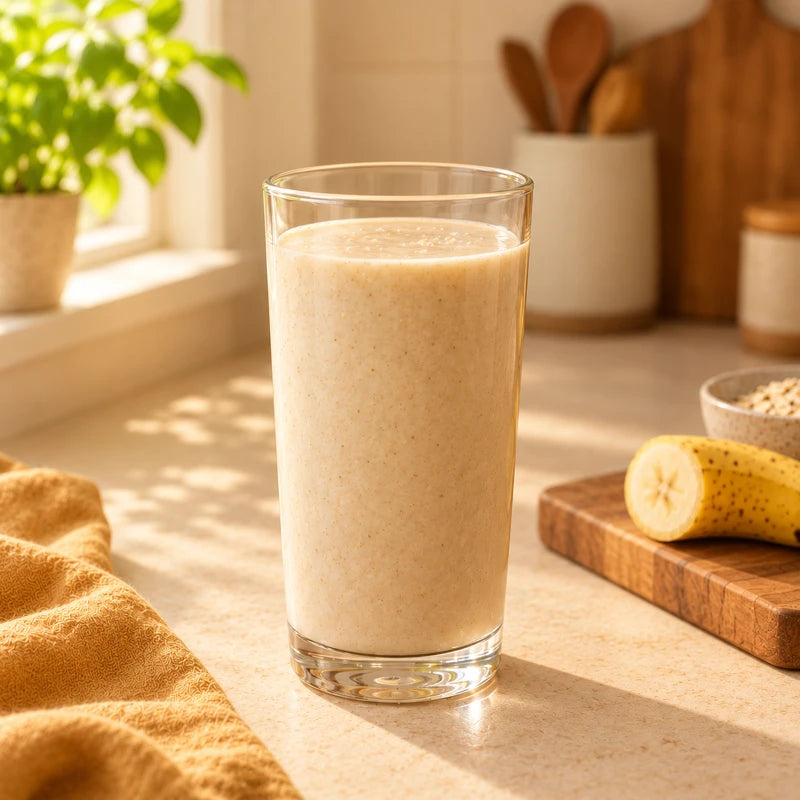
Over ice it is a summer drink in Korea. Made with milk it is often called a misugaru latte.
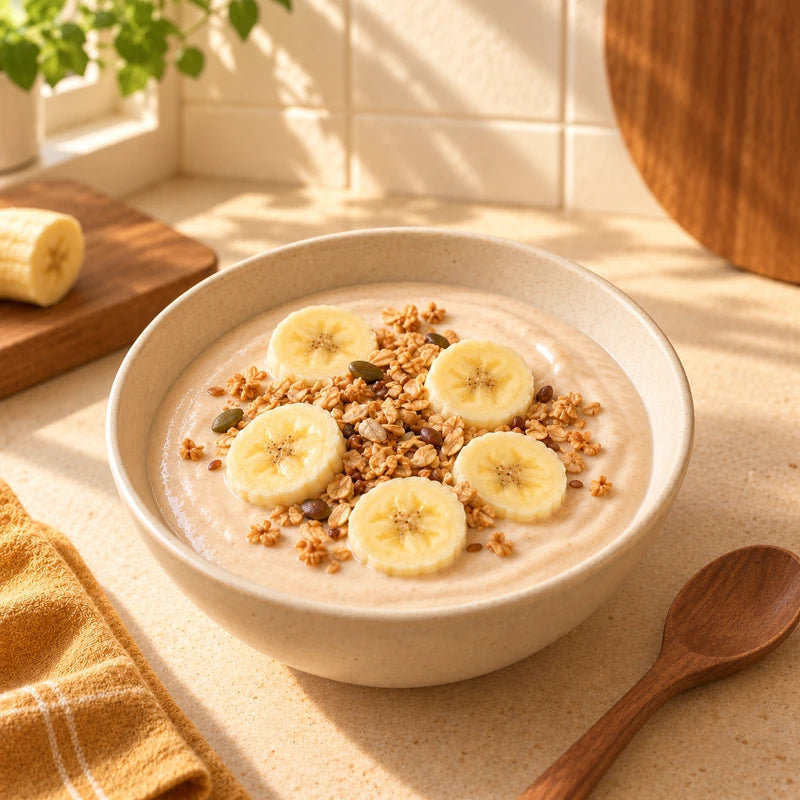
Four ways to use it.
It also goes beyond the glass: people sprinkle it over shaved ice (bingsu) or ice cream, and stir it into yogurt.

A short history.
The Standard Korean Language Dictionary, from the National Institute of Korean Language, defines misugaru as a food made by steaming or roasting glutinous rice, ordinary rice, barley or similar grains and grinding them to powder. The word joins misu, the drink, and garu, powder.
The Encyclopedia of Korean Culture describes two traditional kinds, made from glutinous rice and from barley. It notes that Joseon-era households kept the powder in a porcelain jar, that it served as an emergency food, and that it was eaten as a thick porridge with a little water in place of a meal. In summer it was stirred into cold water with honey or sugar.
A related powder, sunsik (선식), is explained in Misugaru vs sunsik.

What is misugaru called in English?
It has no settled English name. Strictly, the powder is misugaru and the drink made from it is misu, though many people call the drink misugaru too.
- Misugaru
- Misutgaru
- Korean multigrain powder
- Roasted grain powder
- Mixed grain powder
Common questions.
Is misugaru healthy?
That depends on the blend, so read the label. What a glass gives you changes with the grains and beans used and with what you mix it into. Labels count different serving sizes, some instant mixes are sweetened while plain powder has no added sugar, and milk, honey and sugar bring their own calories.
As one example, a 20 g scoop of Misu, our own misugaru, has 70 calories, 3 g fiber, 4 g protein and 0 g added sugar. The full answer is in Is misugaru healthy?
Is misugaru a meal replacement?
In Korea it is a familiar quick breakfast or snack. A glass made from a spoonful or two of powder is a light drink, though, not a full meal. Misu is 70 calories a scoop, and we suggest having it with breakfast, not in place of it. For how it compares with a protein shake, see Misugaru vs protein shakes.
Does misugaru have caffeine?
Plain misugaru is grains and beans, with no tea, coffee or cocoa in it, so it has no caffeine. Flavored mixes and cafe drinks can add coffee, so check the label.
Is misugaru gluten-free?
Usually not. Barley is a common ingredient, and some blends include wheat. The US National Institute of Diabetes and Digestive and Kidney Diseases lists barley among the grains in which gluten occurs naturally. Misu contains barley.
Is misugaru the same as injeolmi?
No. Injeolmi is a Korean rice cake, usually coated in roasted soybean powder. Misugaru is a drink powder. Both taste toasted and nutty.
How do you store misugaru?
Keep it sealed in an airtight container, away from sun, heat and humidity, and follow the best-before date on the pack. Damp air makes the powder clump. For Misu: reseal the pouch and keep it dry and out of the sun.
Where can you buy misugaru?
Korean grocery stores carry it, and it is sold online. Many brands sell both plain powder and sweetened single-serve sticks, so read the ingredient list before you buy.
How do you choose a misugaru?
- The ingredient list. Which grains and beans, and whether anything else is added.
- Added sugar. Zero if you want to sweeten it yourself.
- Fiber per serving. Compare it at the same serving size.
- Where and how it is made. Whether the maker says how the grains are prepared.
More about misugaru.
Where Misu fits
Misu is one misugaru recipe: brown rice 32%, white rice 26%, hominy corn 19%, black bean 13% and barley 10%, with 3 g fiber and 0 g added sugar in a 20 g scoop. What is Misu? has the details, and the product page has the full label.
Sources
- National Institute of Korean Language, Standard Korean Language Dictionary, entry 미숫가루, read 17 November 2026.
- Hwang Hye-seong, 미수 (Misu), Encyclopedia of Korean Culture, Academy of Korean Studies, read 17 November 2026.
- Joy Cho, Meet Multigrain Powder Misugaru, Institute of Culinary Education, 29 May 2020.
- Misu and Injeolmi, Wikipedia, read 17 November 2026.
- National Institute of Diabetes and Digestive and Kidney Diseases, Eating, Diet, & Nutrition for Celiac Disease, read 17 November 2026.
- Seoulscope, Misugaru, for storage, read 17 November 2026.
- Misu, Questions page, for storing Misu.
Five foods.
One scoop.
Misu is our misugaru, made in South Korea with no added sugar.
See Misu→Last updated 17 November 2026